Fly Fishing Redfish Charlotte Harbor in Clear Spring Water
Fly fishing redfish Charlotte Harbor in April can be as good as it gets when conditions line up. This year, the water has stayed unusually clear due to a lack of rain. As a result, the fish are easier to spot, but they are also more aware of everything around them. Because of that, small adjustments in how you present a fly can make a big difference.
In clear spring water, redfish behavior becomes more predictable. However, they will not tolerate sloppy presentations. If you slow down and pay attention to detail, the bite can be consistent and rewarding.
Why Clear Spring Water Changes Redfish Behavior
In most years, spring brings a mix of wind and rain that can stain the water. This April has been different. The water across Charlotte Harbor has stayed clean and clear for longer periods. Because of that, redfish are relying more on their vision than their lateral line.
This matters more than most anglers realize. When the water is clear, redfish can see your fly from a distance. They can also see your mistakes just as easily. A fly that lands too hard or moves unnaturally will often be ignored.
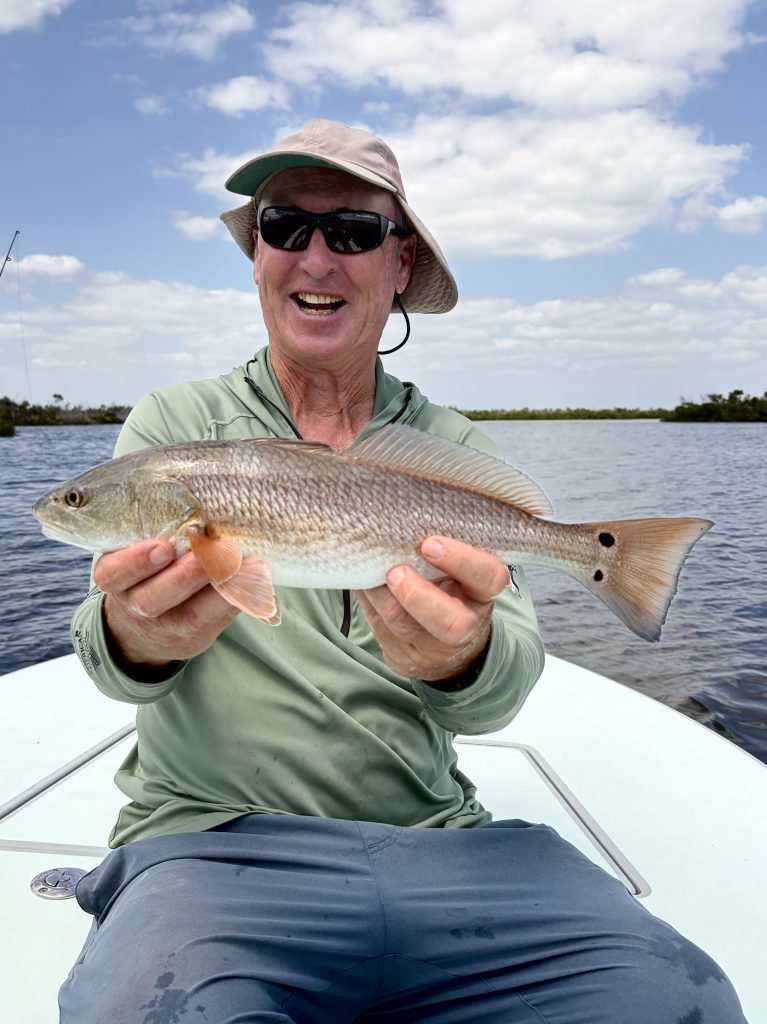
At the same time, clear water allows you to understand how these fish actually feed. You will see them track a fly, pause, and then decide. That behavior is easy to miss in dirty water. Therefore, this is one of the best times to refine your approach.
Mangroves and the High Tide Redfish Pattern
As the tide rises, redfish begin to push tight into the mangroves. They are not there by accident. These areas provide both cover and a steady food source. Small baitfish, shrimp, and crabs all live along the mangrove edge.
For a deeper look at why this matters, read this article on Southwest Florida mangroves and their importance: Southwest Florida mangroves.
During high tide, many redfish will slide under the outer branches. They are actively hunting, but they feel protected. Because of that, they are less likely to chase something that looks unnatural. Instead, they prefer an easy meal that appears to fall right into their zone.
This is where positioning and patience become critical.
Blind Casting Mangroves: The Biggest Mistake Anglers Make
Blind casting the mangroves can be very effective. However, most anglers make the same mistake. They strip the fly too quickly after it lands.
In clear water, redfish often see the fly the moment it touches down. If the cast lands softly near the edge, a fish may already be moving toward it. When you immediately strip the fly away, you pull it out of the strike zone before the fish commits.
Instead, let the fly sit. Give it a second or two. Then make a very subtle movement.
That pause is often the difference between a refusal and an eat. It feels unnatural to wait, but it matches what the fish expect to see. A stunned baitfish or shrimp does not sprint away the second it hits the water.
Because of that, slowing down is one of the simplest ways to catch more fish.
Why Slow Movement Triggers More Eats
Slow movement works because it removes pressure from the fish. In clear water, everything is magnified. Fast strips can look aggressive and unnatural, especially in shallow water near structure.
On the other hand, a slow, controlled presentation gives the fish time to react. It also keeps the fly in the strike zone longer. Therefore, the fish does not have to make a quick decision.
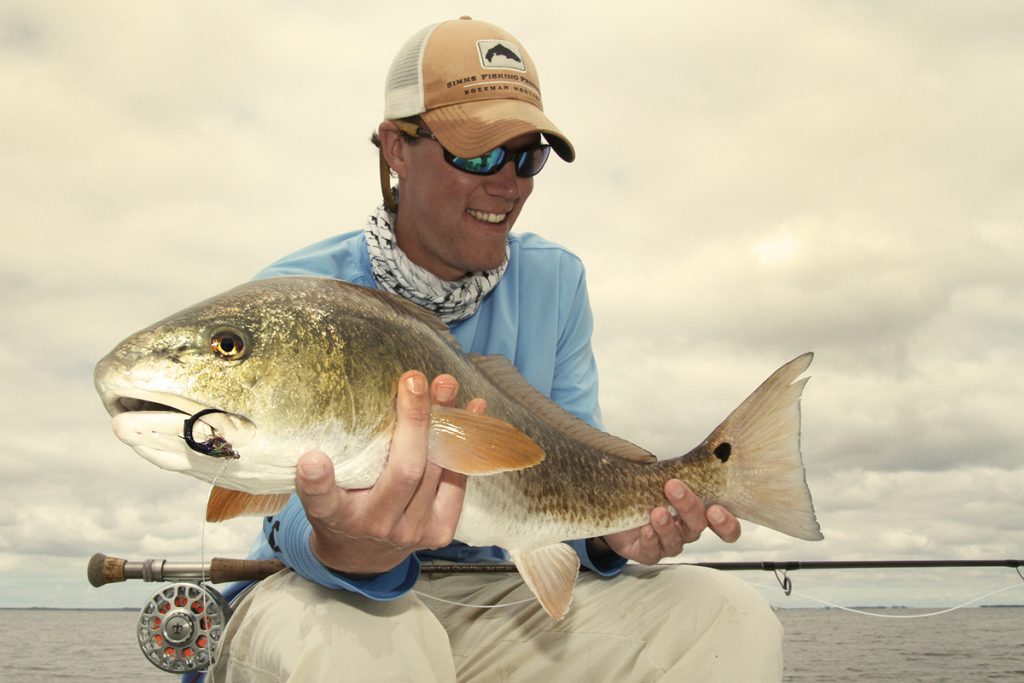
In many cases, the best approach is to barely move the fly at all. Let the materials do the work. Natural movement from the water can make the fly come alive without much input from you.
This is especially important when fish are tucked tight to the mangroves. They are already in a feeding position. You are not trying to trigger a chase. You are simply offering something that looks easy to eat.
Fly Fishing Redfish in Charlotte Harbor Sight Fishing
Clear water opens the door for sight fishing. You can spot fish cruising, tailing, or holding along the mangrove edge. However, this advantage comes with its own challenges.
The biggest issue is visibility. The fish can see you just as easily as you can see them. That includes your fly line. A poor cast or bad angle will often send the fish in the opposite direction.
Because of that, placement becomes more important than distance. A short, accurate cast is far better than a long cast that lands off target. Ideally, you want the fly to land just outside the fish’s immediate field of view and then move into it naturally.
Also, keep your movements slow on the boat. Sudden motion will stand out in clear conditions. If you stay controlled and deliberate, your chances improve significantly.
Best Fly Choice for Fly Fishing Redfish Charlotte Harbor
Fly selection matters more when the water is clean. In these conditions, simple patterns tend to outperform bulky or flashy flies.
A small baitfish profile works well in Charlotte Harbor during the spring. Look for something that has natural colors and plenty of movement. Materials that breathe in the water can create life without requiring aggressive stripping.
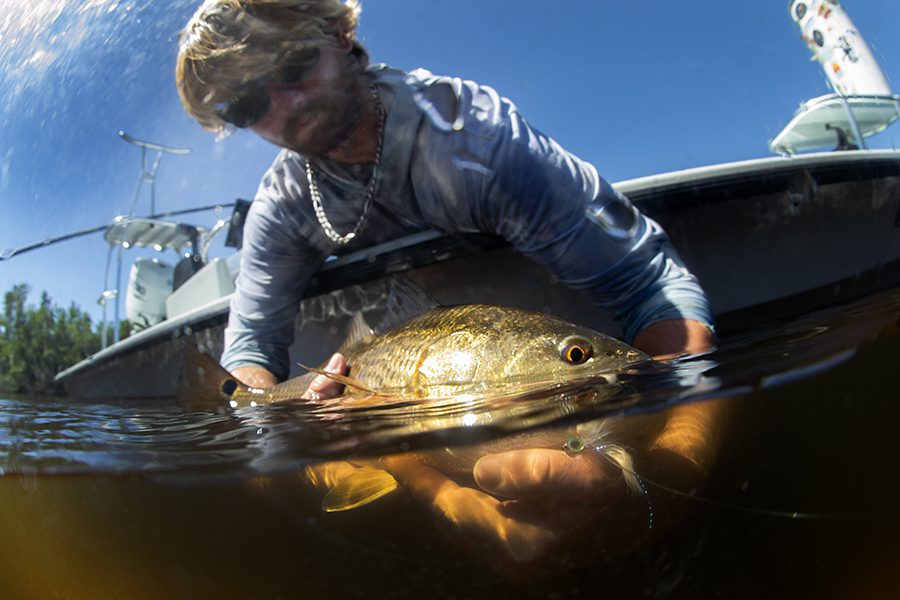
This is important because you are not trying to force a reaction. Instead, you are trying to convince the fish that what it sees is real. A fly that moves on its own, even slightly, will often get more attention than one that needs constant input.
Keep it subtle. Let the water do the work.
Putting It All Together on the Water
When you combine these factors, a clear pattern starts to emerge. In April, with clean water and rising tides, redfish will push into the mangroves and feed with confidence. However, they will also inspect everything closely.
To adjust, focus on a few key things. First, make soft, accurate casts near the mangrove edge. Second, resist the urge to strip the fly immediately. Let it sit, then move it slowly. Third, use flies that create natural movement without much effort.
If you are sight fishing, pay attention to angles and line control. Keep everything quiet and deliberate. The fish are there, but they are not forgiving.
Fly fishing redfish Charlotte Harbor during a clear spring can be some of the most technical fishing of the year. At the same time, it can also be the most rewarding. When you slow down and match the conditions, the results will follow.