Fly Fishing Juvenile Tarpon in Charlotte Harbor
One of my favorite past times is using a kayak or paddle board to find remote water in Charlotte Harbor where juvenile tarpon might be holding. Fly fishing juvenile tarpon like this is not something you rush.
At times, the planning can take weeks. I study a spot, wait on the right tide, and watch the weather. Then, when it lines up, especially on a day too rough for the skiff, I go.
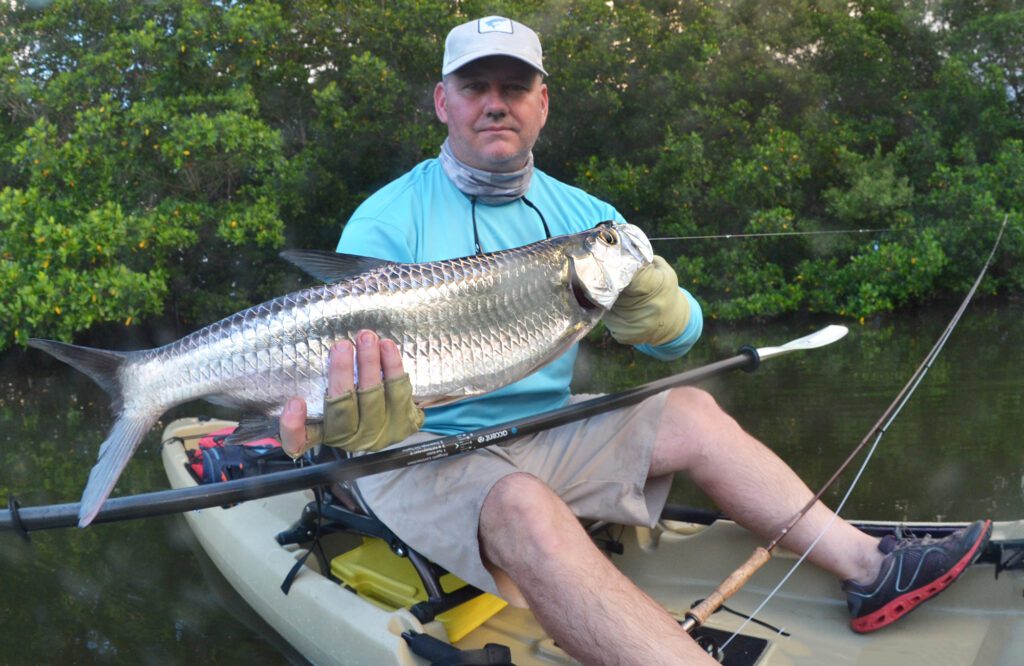
Getting There Is Part of It
Getting there is never easy. In most cases, launch spots are overgrown, full of snakes, and honestly a little dangerous. Still, I sometimes ask myself why I am doing this alone. After all, nobody would find me out there.
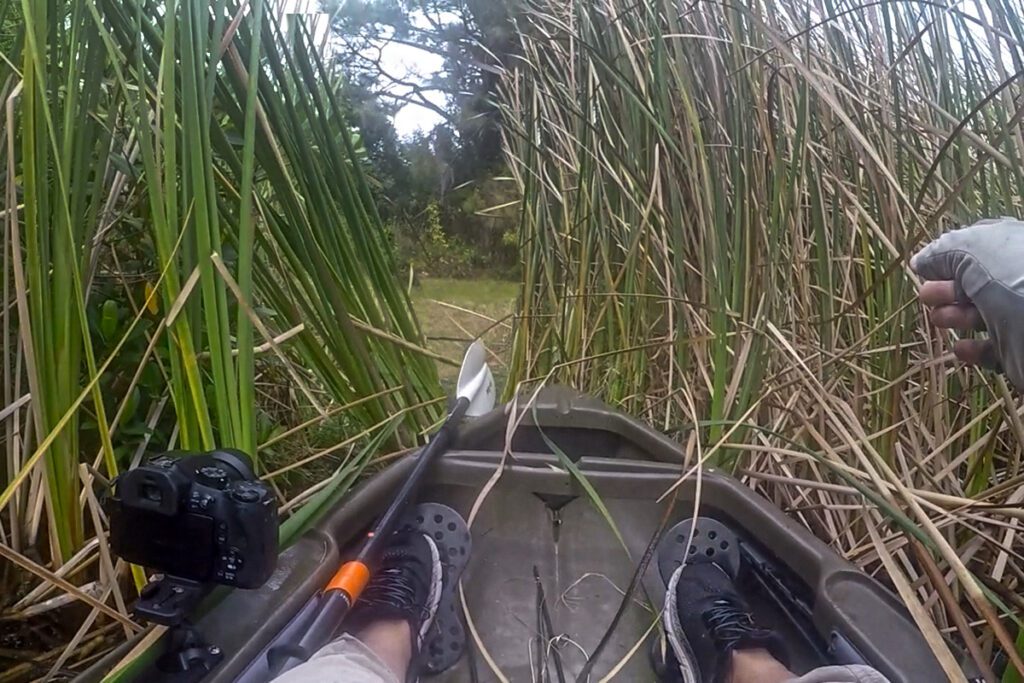
However, that thought disappears the moment I see the first juvenile tarpon roll under the mangroves. A quick breath of air. Then his back, smooth and silver, barely breaking the surface.
It almost feels like he thinks no one can see him.
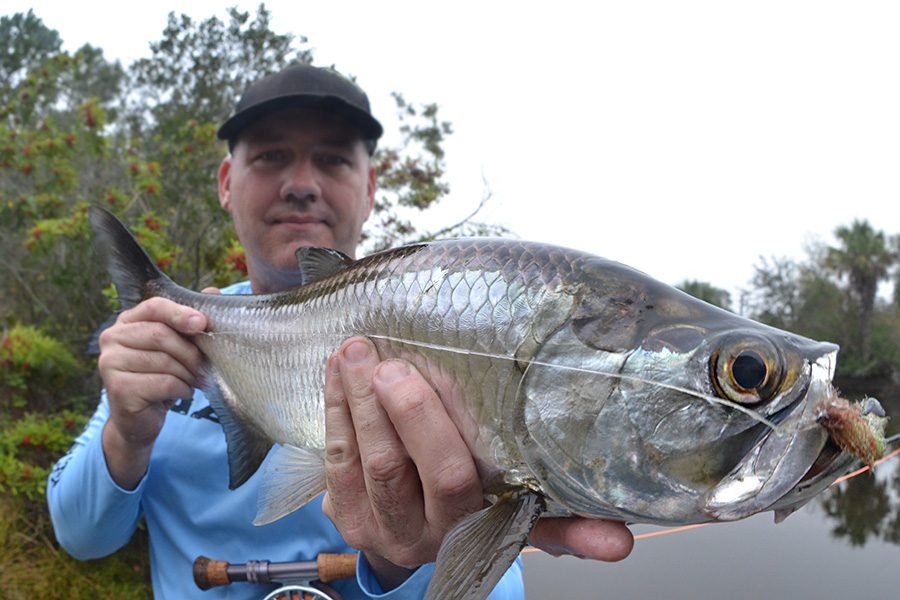
At that point, all you have to do is put a small white fly near him and wait. In fact, fly fishing juvenile tarpon in water like this feels more like watching than fishing.
The fish will follow it. To me, it looks like curiosity, not hesitation. On the other hand, some say they are short striking. Even so, I have never fully believed that. A fish called Megalops, giant eye, is not missing much.
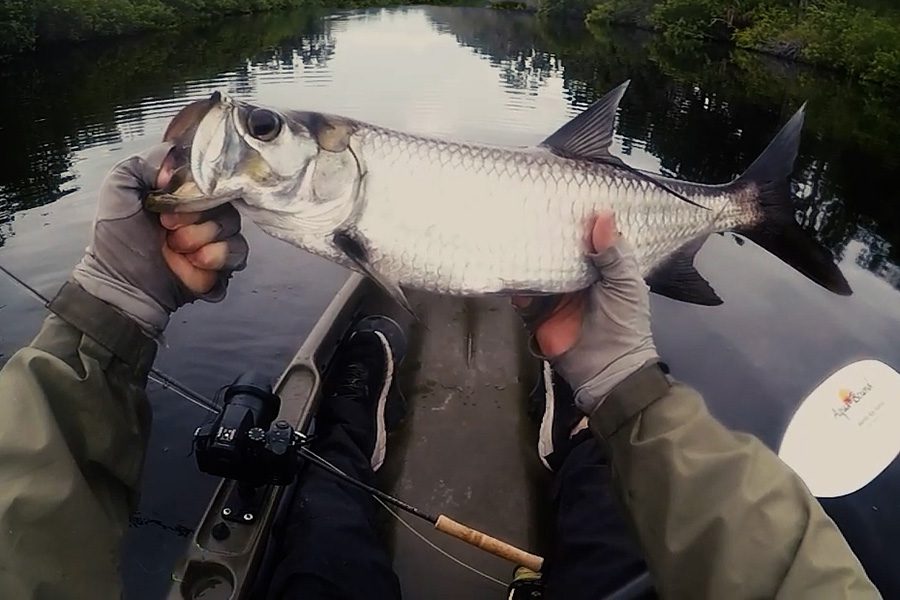
Eventually, when he eats, everything changes. The fight is fast and wild. Then, just as quickly, it is over. They roll on their side like they are done, almost like they are saying alright, you win.
So, finding these little guys on your own is not hard. It also does not require hiring a guide if you are even remotely a decent angler and have some adventure in you. Plan. Prepare. Paddle.
Where to Look
First, look for quiet places with access to open water. When fly fishing juvenile tarpon, I look for natural lines where these fish have traveled for generations. Because of that, they tend to hold along these paths.
Next, consider man made canals. They can hold fish, but most start from a natural drain or cut. Therefore, that connection matters. Follow it, and you will usually find life moving through.
In addition, they like corners, dog legs, and any place where water is moving. These spots give them an edge. That is where they set up and wait.
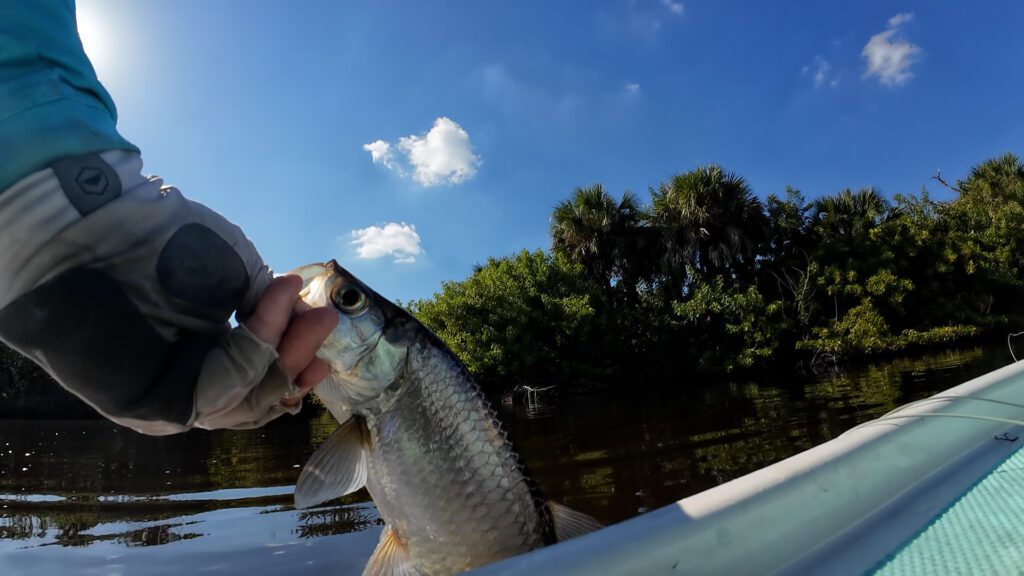
Most importantly, they hunt under mangroves. When they roll for air, they usually slip right back under the cover to feed. Because of this, you need to be ready when that happens.
Then, put the fly in position, let it sit for a few seconds, and give it a slow strip. Do not rush it. They can see it just fine.
Why It Is Worth It
In the end, finding these fish is worth every paddle and every bad launch. Yes, you can find them in summer around Charlotte Harbor. Most of those places are known. Even so, I bet if you try hard you can find your own spots without any help.
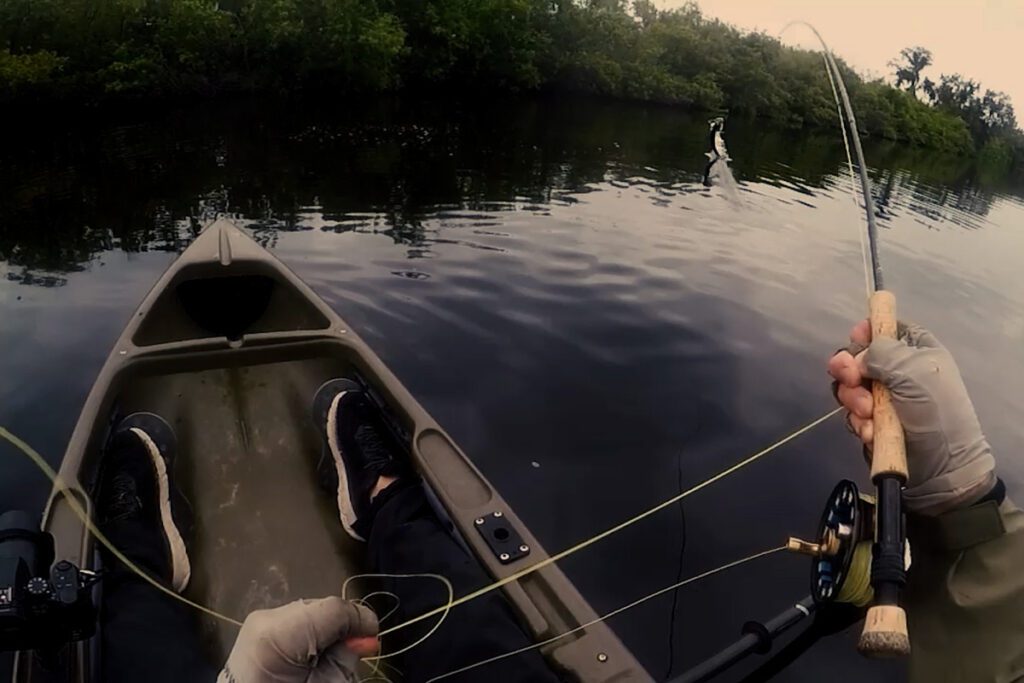
But then again, finding them in winter, on a cold rainy day, feels different. That is when it feels like a real discovery. Fly fishing juvenile tarpon during those times is something most people never see.
For that reason, I keep most of these places to myself. A few I share with people I trust. The rest stay quiet. When you find these fish, it is a blessing, and you should treat it that way.
So, if you spend enough time out there, you will find your own water. Go alone sometimes. No distractions. Just you and nature. Then wait and watch. Be patient, and it will happen. Good luck.
Red this story. Charlotte Harbor Fly Fishing Guide | Tarpon Snook Redfish